
The Conflict with the Home Front
All Quiet on the Western FrontThe clash between the soldiers' reality and the civilians' ignorance, experienced during Paul's leave and through letters.
increasing Bearing strength in each event
 decreasing
Bearing strength in each eventdecreasingThe Leave
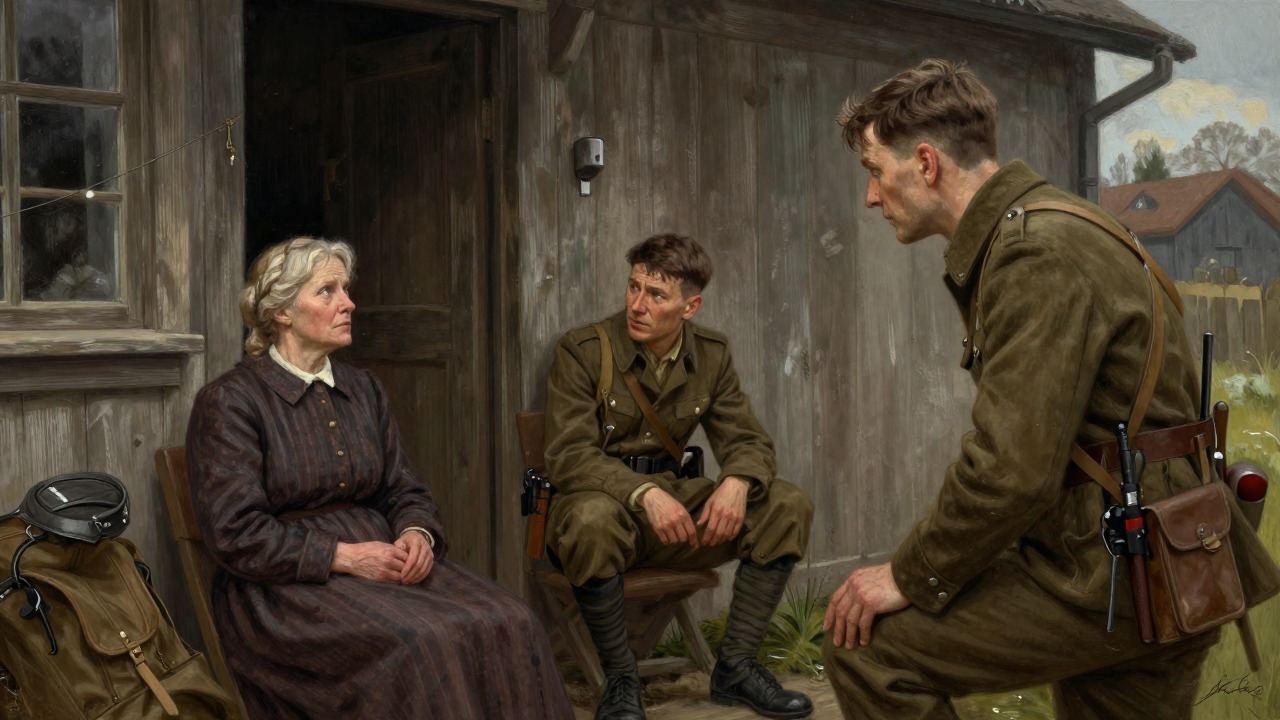
The Leave
The Arrival Home
Paul arrives home to find his mother ill. The house feels strange. He cannot connect with his family. The war has made him a stranger.
The Father's Questions
His father wants to hear about the front. Paul cannot speak about it. He tells amusing stories, but feels guilty. The gap between them is unbridgeable.
The Civilians' Talk
In the beer garden, Paul meets a group of civilians who talk about the war as a grand adventure. They want to annex territories. Paul is disgusted. They have no idea what war is really like.
The Major's Insult
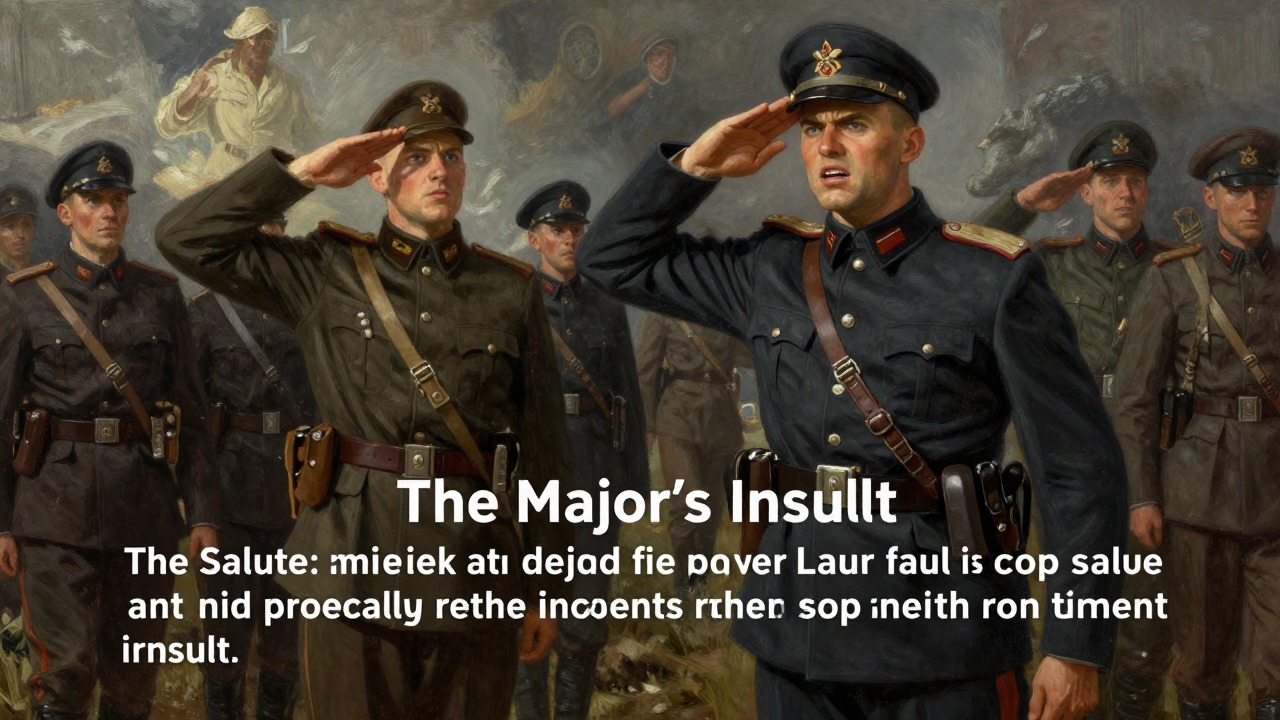
The Major's Insult
The Salute
A major yells at Paul for not saluting. Paul is forced to run back and salute properly. The incident ruins his evening.
The Powerlessness
Paul cannot defend himself because his leave depends on his behavior. The authority of the rear is a constant threat.
The Anger
He is filled with rage but must suppress it. The conflict with the home front is a reminder that the war is not just at the front.
The Visit to Kemmerich's Mother
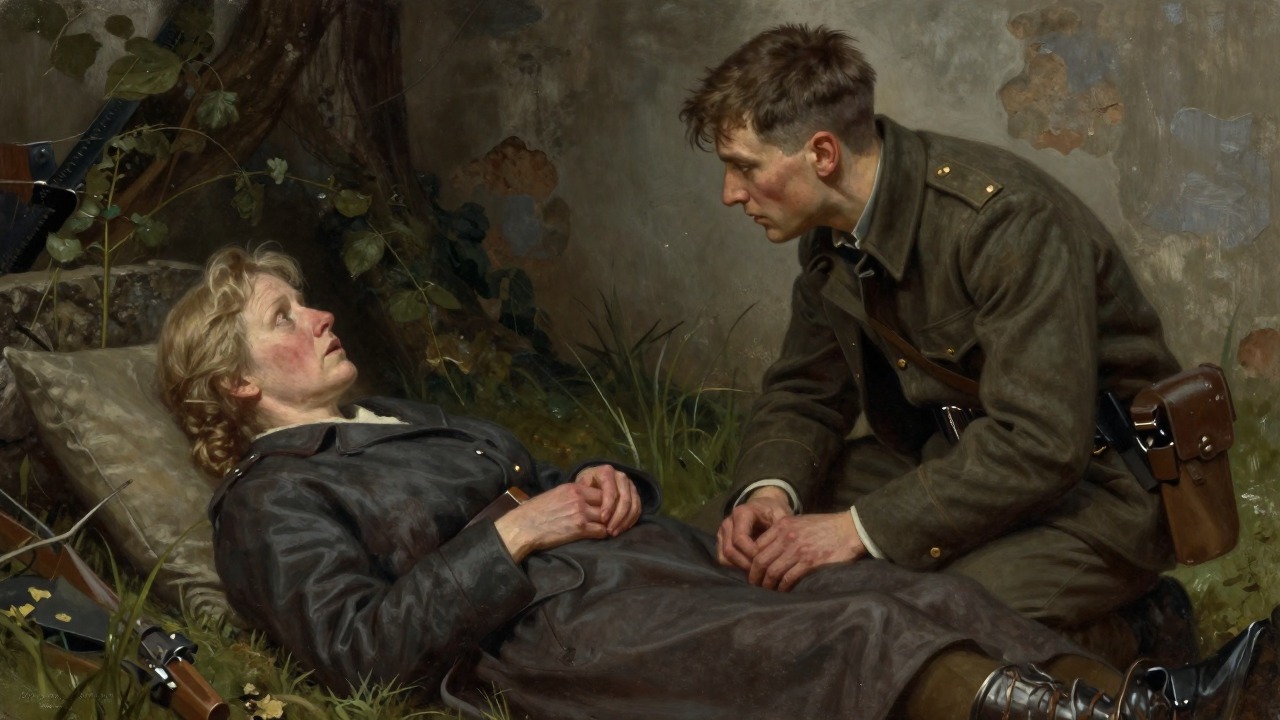
The Visit to Kemmerich's Mother
The Grieving Mother
Paul visits Kemmerich's mother. She is distraught and demands to know the truth. Paul lies, saying he died instantly.
The Burden of the Lie
He feels guilty for lying, but he knows the truth would be worse. The encounter deepens his alienation from the home front.
The Indifference
He also feels a hint of irritation. Why does she not understand that many have died? The war has made him numb to individual grief.
Paul's first leave, after the hospital
During the same leave
Later in the leave
